✦ Work
Customer Sign-Up
Empowering customers to onboard independently and start hiring faster
Role
Lead UX Designer
Team
Lead Designer, Product Manager, Engineering Team, UX Researcher, Sales Team, Product Operations
Year
2024
TimeLine
6 months to design complete // 1 year to launch

Problem Statement
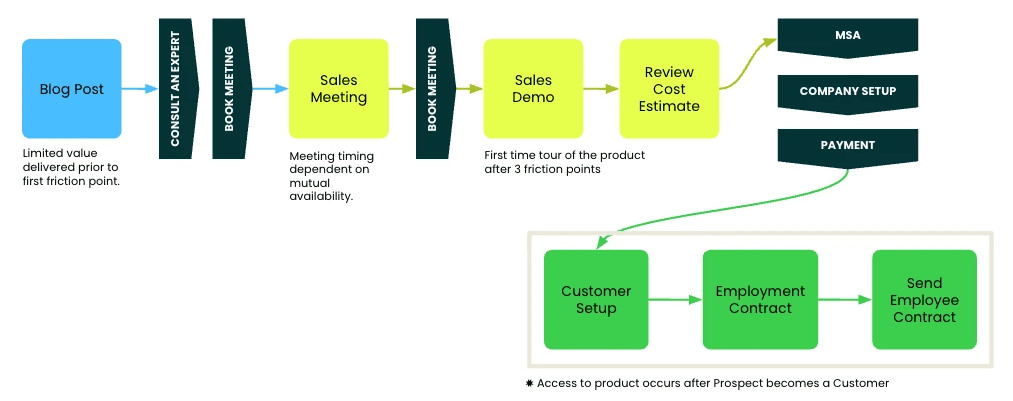
Before this project, new customers couldn’t create their own accounts with Velocity Global. Every setup required coordination with a sales representative, manual account creation, and payment of a deposit before customers could even access the platform. This created friction and delays, often slowing the hiring process for teams eager to expand internationally.
Goal
Design a fully self-serve sign-up experience that enables customers to onboard quickly and start hiring without relying on our internal teams.
My Role
As the sole designer, I led the Customer Sign-Up experience from concept to launch. Partnering closely with product, engineering, and operations, I defined requirements, explored self-serve onboarding flows through rapid prototyping, and ran user testing to refine the design. Throughout the project, I kept stakeholders aligned through regular design reviews and progress updates.
Key Features
Self-serve onboarding: Customers can complete the entire process—from account creation to payment—on their own.
Collaborative setup: Supports multiple roles, allowing different team members to complete their respective portions of sign-up.
Faster time to hire: Reduces onboarding friction so customers can begin hiring within days.
Impact
60%
adoption from customers
7 to 1 days
reduction in setup time
100%
launched for all US customers
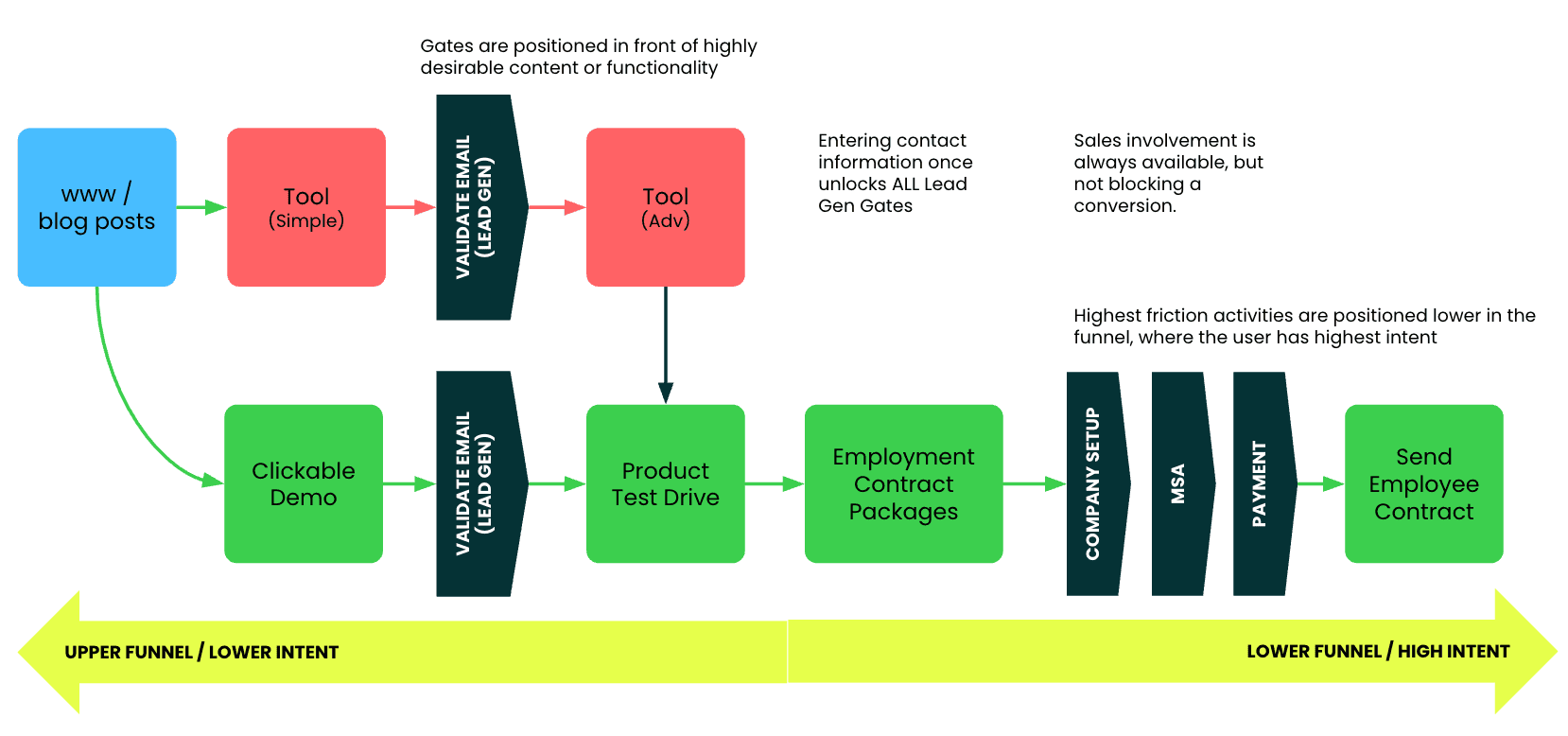
Target State

✅ Supporting a fully self-serve hiring experience
✅ Explore the platform before creating an account
✅ Begin hiring right away — no sign-up required
✅ Move account creation to the final step
Goals
Learn about the typical process for companies when signing up for a new service
Understand team sharing needs when setting up an account and agreeing to the Terms of Service
Identify if there is a need for customers to invite coworkers to the payment setup flow
Identify user pain points for initial design
Method
Unmoderated concept testing via usertesting.com
Target user: HR Customers
Recruitment:
N=10
5 Enterprise
5 SMB
Country/Region:
US
Age: 18-65
Experience criteria:
Must have job role in HR industry
User Persona
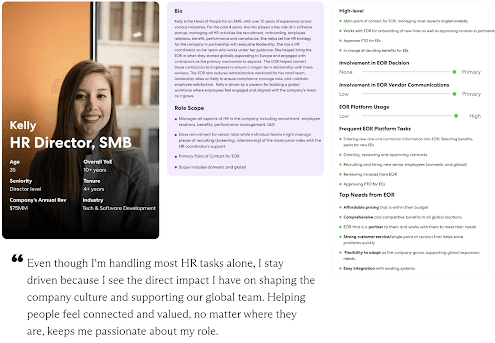
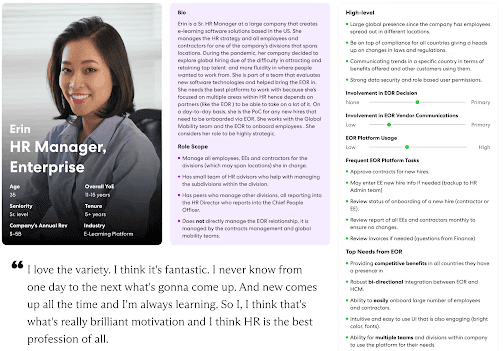
HR professionals are responsible for hiring talent across borders and are evaluating Employer of Record (EOR) providers to help them do so efficiently and compliantly. They’re often the ones to initiate their company’s engagement with an EOR, but completing sign-up may require buy-in from finance, legal, and leadership.
Their goal is to hire their candidate abroad quickly and confidently, while ensuring compliance and minimizing internal friction.
For larger enterprise customers, this person is typically an HR Manager within a broader team. For small and midsize businesses, they’re often a solo HR generalist handling all aspects of hiring and onboarding.
Pain Points
❌ No way to self-serve or start hiring online.
New customers can’t sign up and immediately begin the hiring process (their primary goal).
❌ High barrier to entry.
Prospective customers must schedule a call with a Velocity Global representative just to see the product. There’s no way to explore or test it independently.
❌ Lengthy, manual onboarding process.
Even once a customer decides to move forward, multiple roadblocks, including meetings, paperwork, and approvals, delay their ability to access the platform and start hiring.
Original Flow
Key Findings
✸ Customers hesitate to engage without clear in-product guidance or onboarding.
✸ Team collaboration is essential, as setup often involves legal, finance, and leadership.
✸ Users are unclear about shared logins and teammate invitation permissions.
✸ SMB customers want flexible ways to share and review Terms of Service.
Ideation
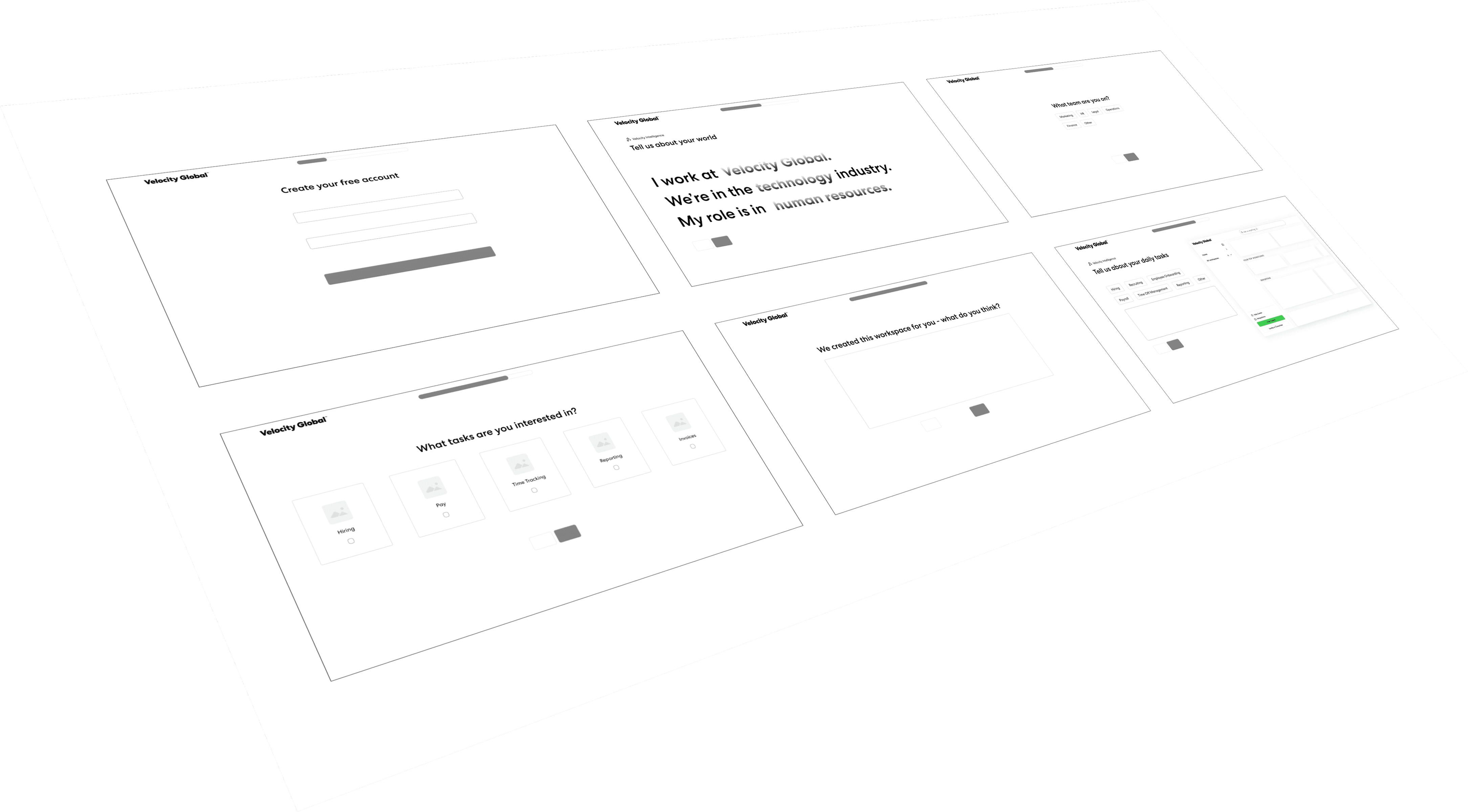
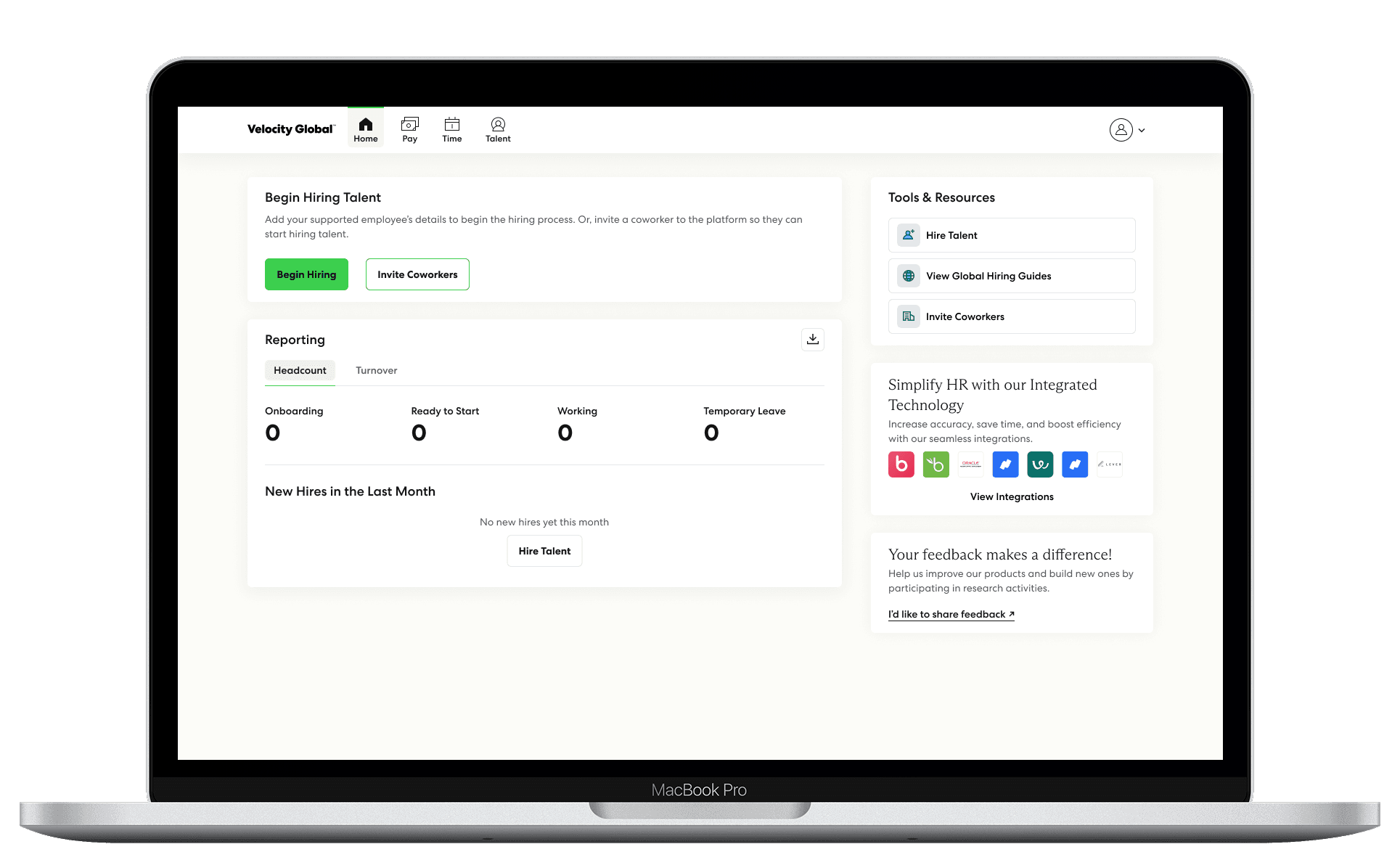
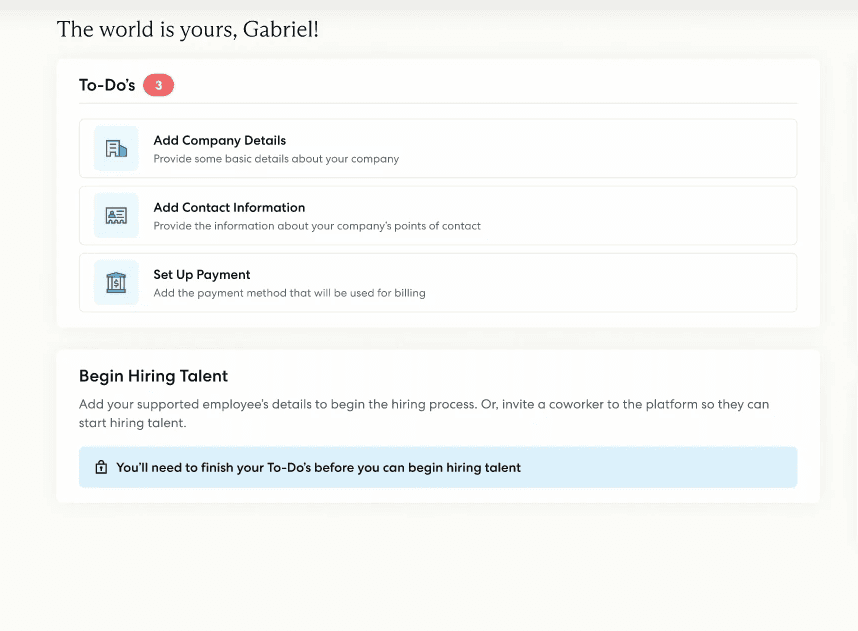
01 ∙ Guided Homepage for First-Time Users
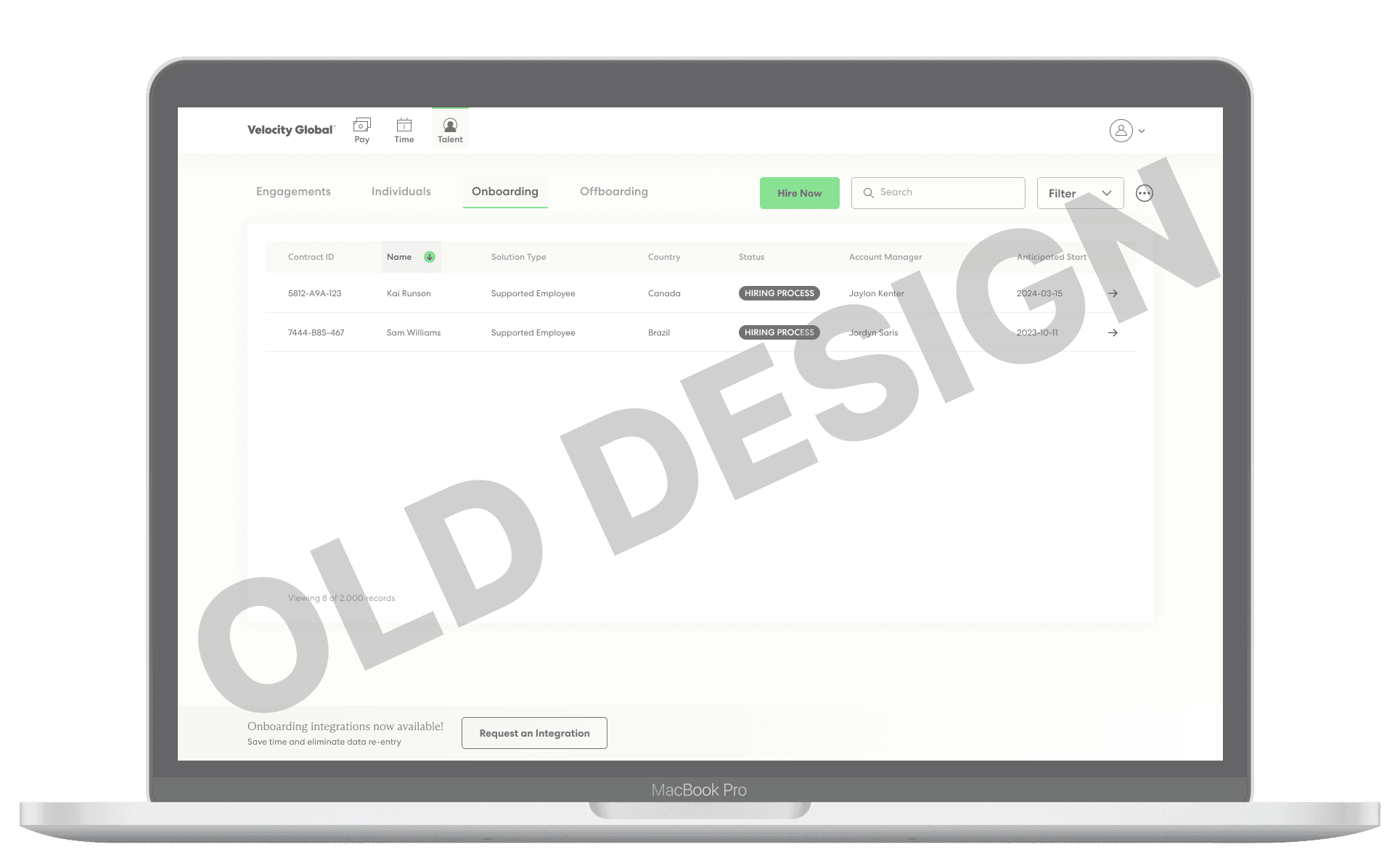
Replaced the empty data table homepage with a guided entry experience that helps new users understand what to do next. The new design introduces clear calls to action—such as Start Hiring or Invite a Teammate—and provides contextual tips, quick links, and a snapshot of reporting to build confidence and momentum.
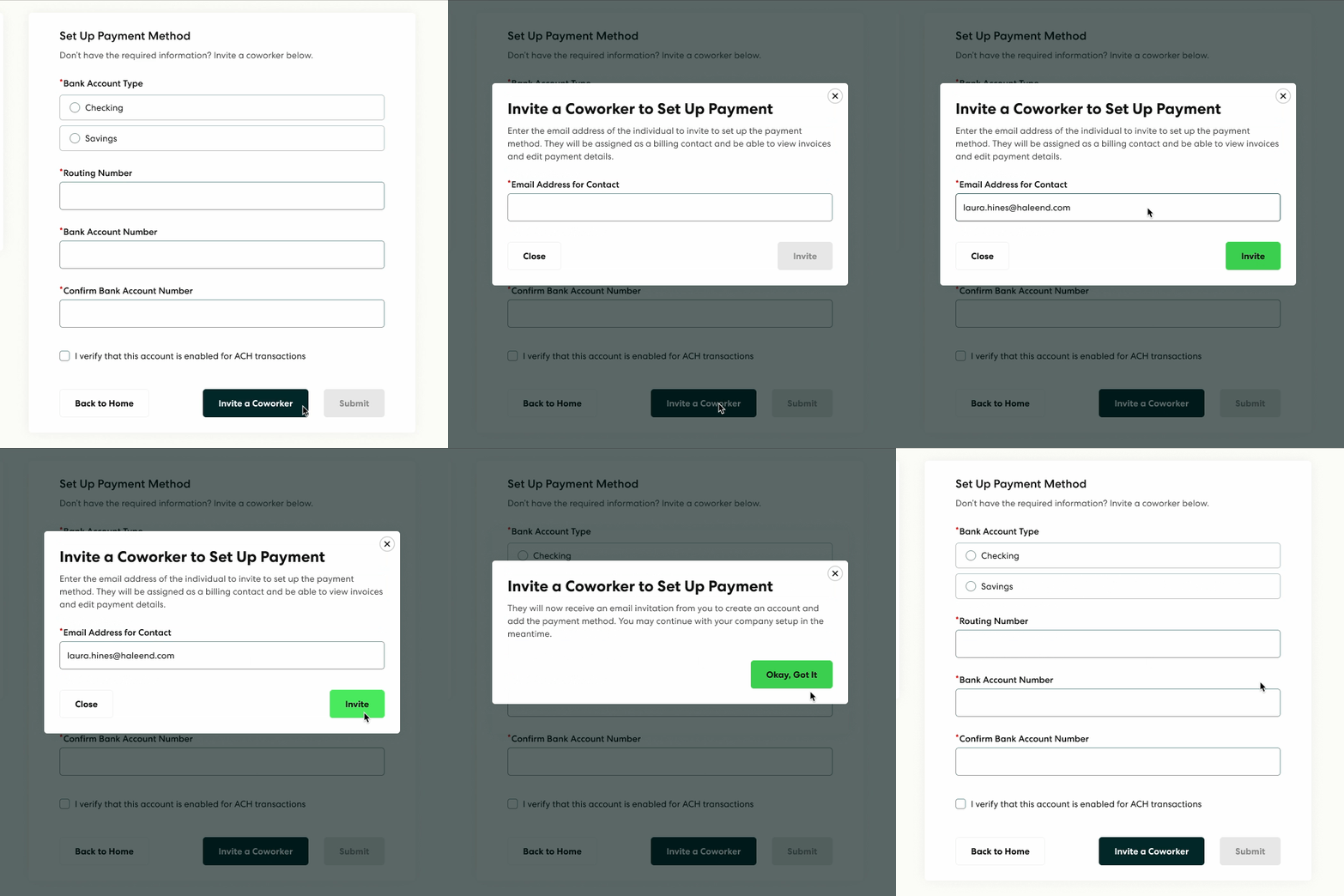
02 ∙ Payment Invite CTA
Added a Payment Invite call-to-action to let users who lack payment authority invite the appropriate coworker to complete the step, ensuring onboarding continues smoothly without delays.
03 ∙ Flexible To-Do Completion
Enabled company sign-up tasks to be completed asynchronously and in any order, allowing different team members to collaborate efficiently and keep the onboarding process moving without delays.
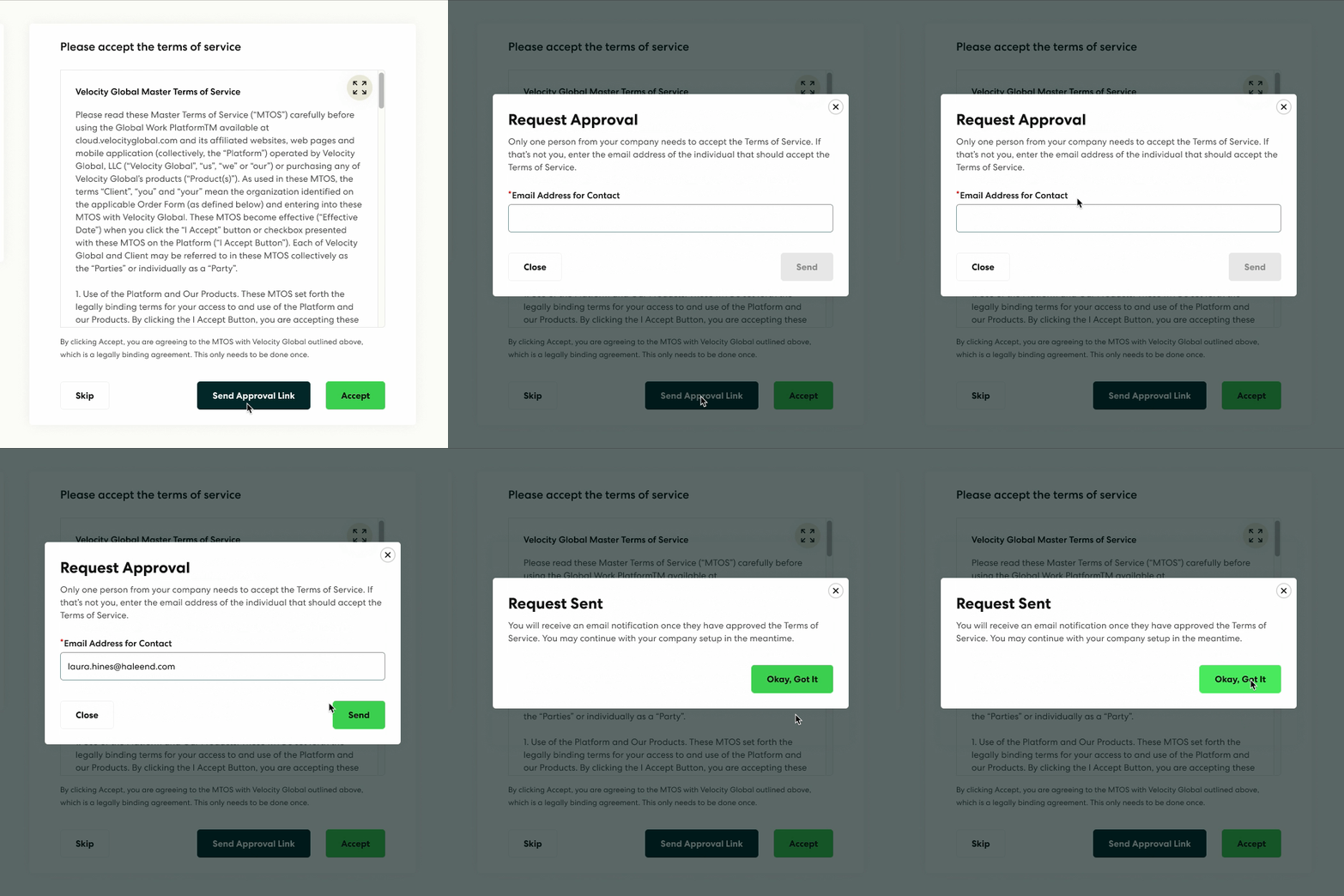
04 ∙ Terms of Service Sharing
Enabled users to share the Terms of Service link with coworkers, allowing teams to review and approve the contract even when the user initiating sign-up cannot sign on their own.
MVP Launch

✅ In-app company account setup completed entirely by the customer
✅ Payment Invite CTA allowing the customer to invite a coworker to enter payment details

✅ Asynchronous To-Dos so customers and their team can complete required steps in any order
Key Learnings
Document key decisions. When the project switched PMs, gaps in documentation caused confusion around why certain requirements existed. Clear notes and rationale really help keep everyone aligned.
Think about the whole ecosystem. We didn’t realize at first that the homepage needed updates for the flow to work smoothly — mapping all touchpoints upfront is crucial.
Check operational constraints early. Last-minute ops decisions impacted the Terms of Service step and company info step, highlighting the importance of confirming cross-team processes early.
This project reinforced the importance of involving the right stakeholders early and mapping all touchpoints to avoid gaps in the user experience. Clear documentation and rationale are essential, especially when projects face delays or team changes, as they help keep everyone aligned. We also learned to confirm operational processes upfront and plan for dependencies, so last-minute surprises don’t derail the flow.