✦ Work
Employee Hiring
Empower customers to hire their workforce
Role
Lead UX Designer
Team
Lead Designer (Me), Product Manager, Engineering Team, UX Researcher, Sales Team, Product Operations
Year
2024
TimeLine
3+ months
Problem Statement
Hiring talent across countries is complex due to varying local requirements and regulations. In the current experience, customers rely heavily on internal operations support to complete hiring forms, leading to significant back-and-forth communication. This makes the process time-consuming, even though customers want to get their workers hired as quickly as possible. Our goal was to simplify this process and empower customers to hire talent globally, independently, and with confidence through the product.
Goal
Create a seamless, self-serve hiring flow that empowers customers to confidently hire talent anywhere in the world without needing operational support.
My Role
I was the sole product designer for this project, responsible for the experience from ideation through final design and launch. I collaborated with the product manager, engineering, and operations teams, led user testing, and presented design solutions to key stakeholders.
Key Features
Country-specific fields tailored to local hiring requirements.
Fully self-serve experience that allows customers to complete hiring independently.
AI-powered inline support to guide users and answer questions as they fill out forms.
Impact
20%
reduction in hiring times
11
countries supported
80%
hiring completed unassisted
Target State

Goals
Understand potential customers’ current employee hiring and onboarding experience
Identify the current pain points, difficulties and expectations that could happen during the employee onboarding
Evaluate current onboarding form on Velocity Global
Discover new opportunities in onboarding form for Velocity Global
Method
Conducted 60 mins 1:1 In-depth interviews with 17 customers
Country/Region: US/CA
Business type:
Enterprise: >1B
Mid-market: 200M ~1B
SMB: < 200M
Experience criteria:
must have experience in onboarding a new, global hire
must have experience in using one of EOR, PEO or HRIS platforms/services
User Persona
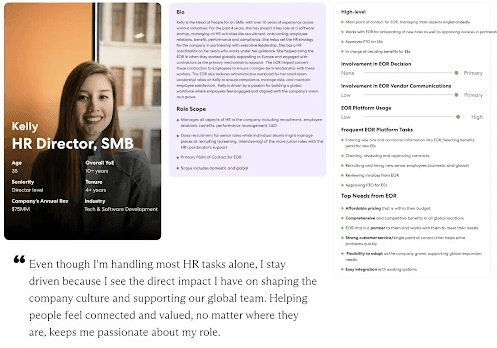
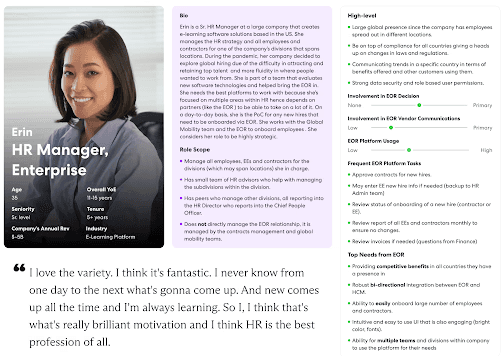
The customer persona is most often an HR professional looking to hire someone internationally. For larger enterprise customers, their role may be HR Manager within a larger team, while for SMB customers they may be the sole HR professional in the company.
Pain Points
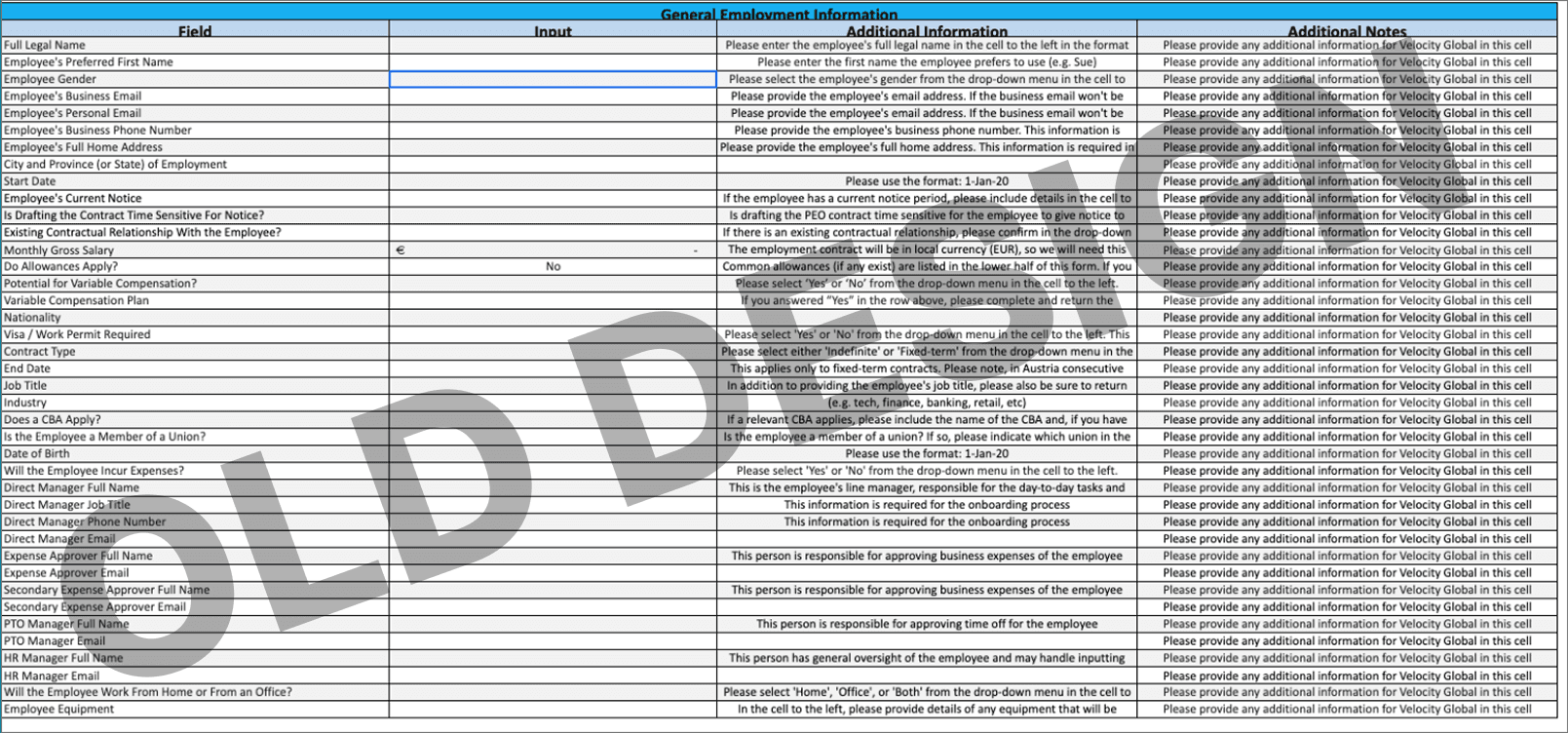
❌ Manual, time-consuming process.
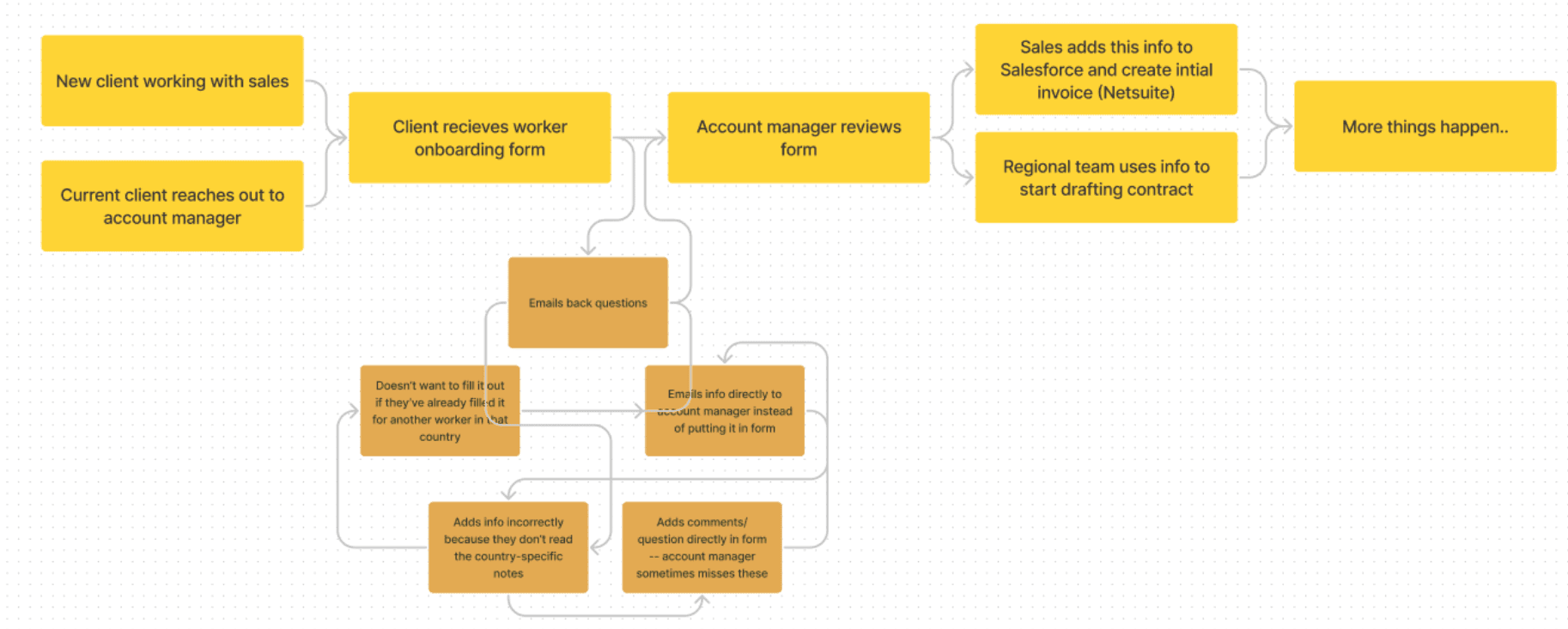
Hiring originally relied on Excel sheets emailed back and forth between customers and operations, creating long threads, redundant data entry, and frustration for both sides.
❌ Complex in-platform form slowed users down.
When the Excel sheet was replaced with a digital form, the volume and complexity of fields overwhelmed customers, leading to mistakes and delays. Internal teams often had to complete forms on their behalf.
“WTF these Excel forms look like the 90s” - Actual Customer
“You’re not actually as sophisticated as we thought you were” - Actual Customer
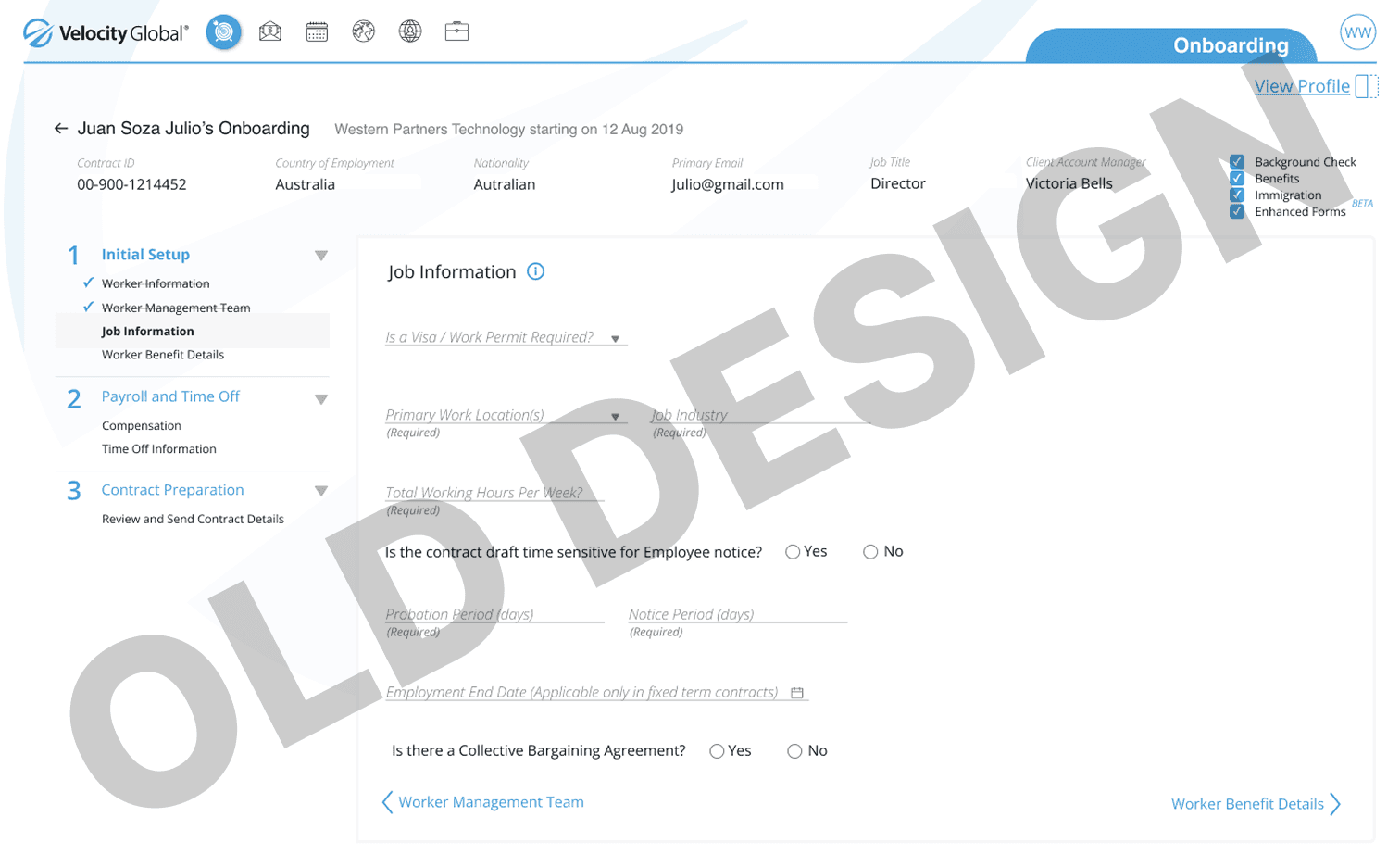
Original Flow
Key Findings
✸ Customers need country-specific guidance and recommendations.
This was most important for areas like time off and benefits, where requirements vary widely.
✸ Users want fields to pre-populate when possible.
Customers preferred smart recommendations or integrations that reduce manual entry.
✸ HR teams need shared access, not cross-functional access.
While multiple HR users often collaborate on onboarding, there’s limited need for input from other departments like payroll or benefits.
✸ The hiring flow is overly complex and hard to follow.
The process is long, requires excessive manual input, and uses confusing terminology that doesn’t match customers’ mental models.
Ideation
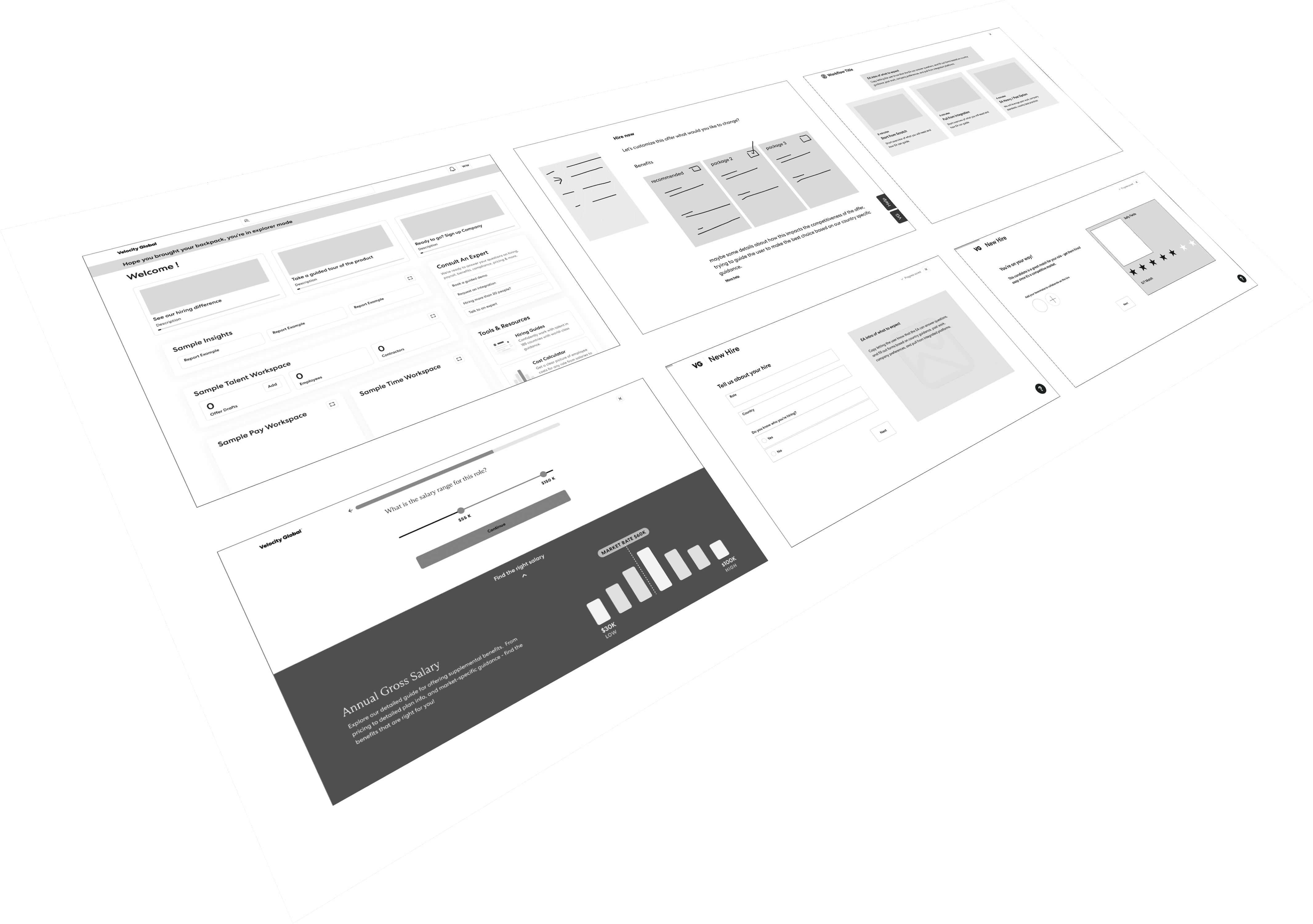
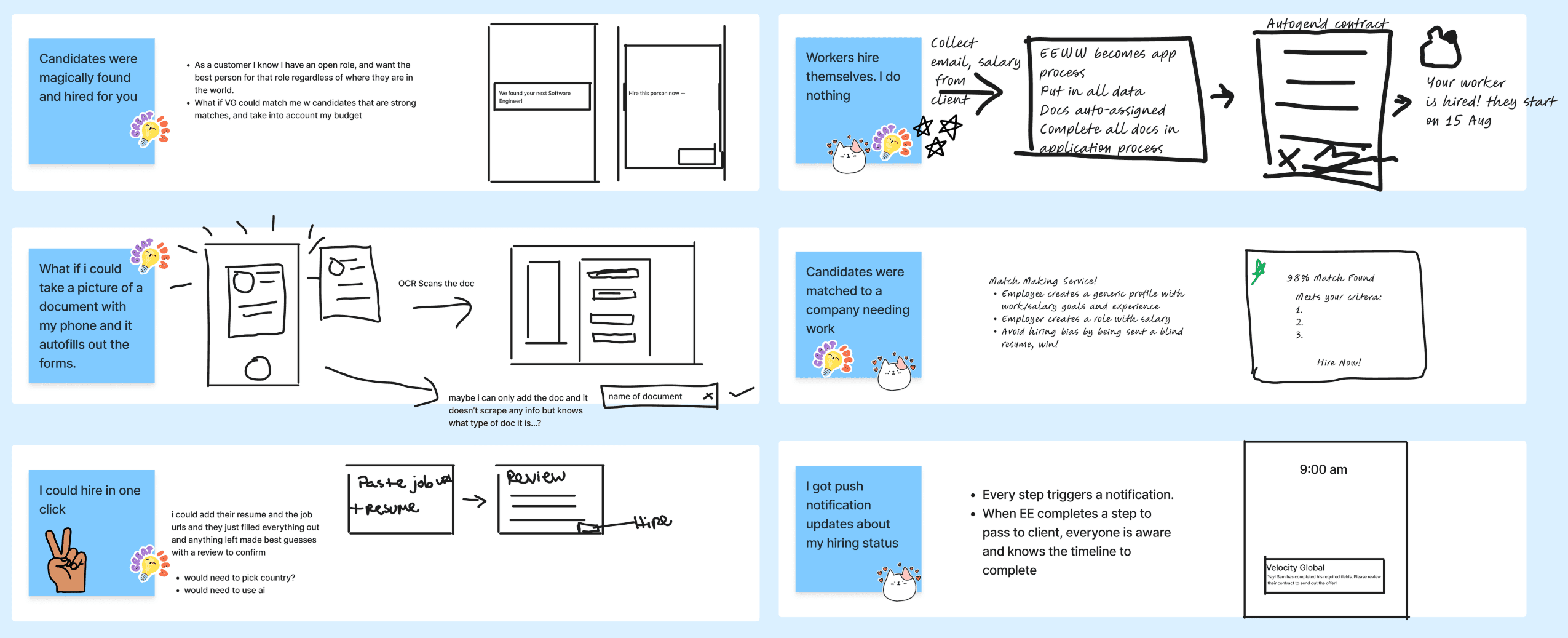
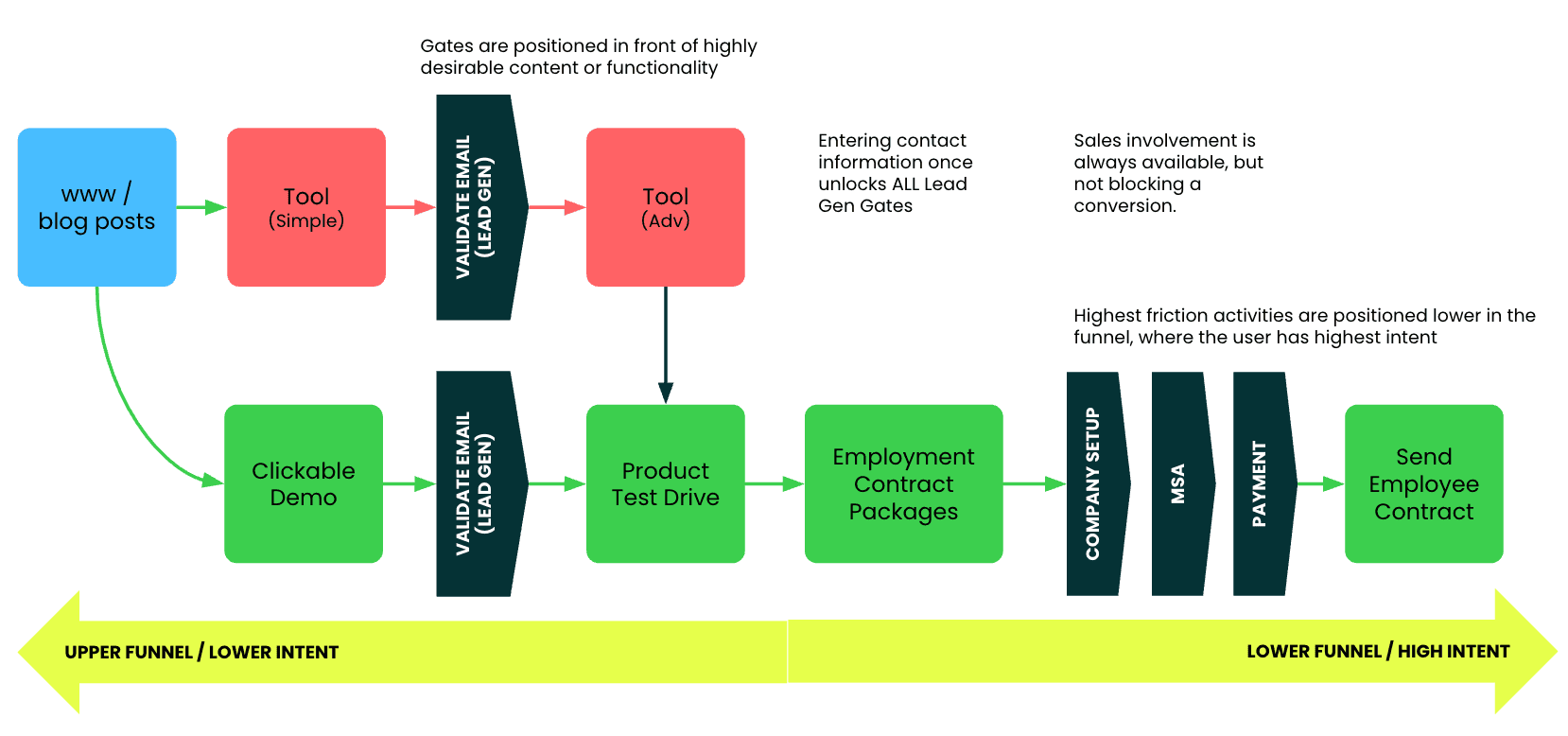
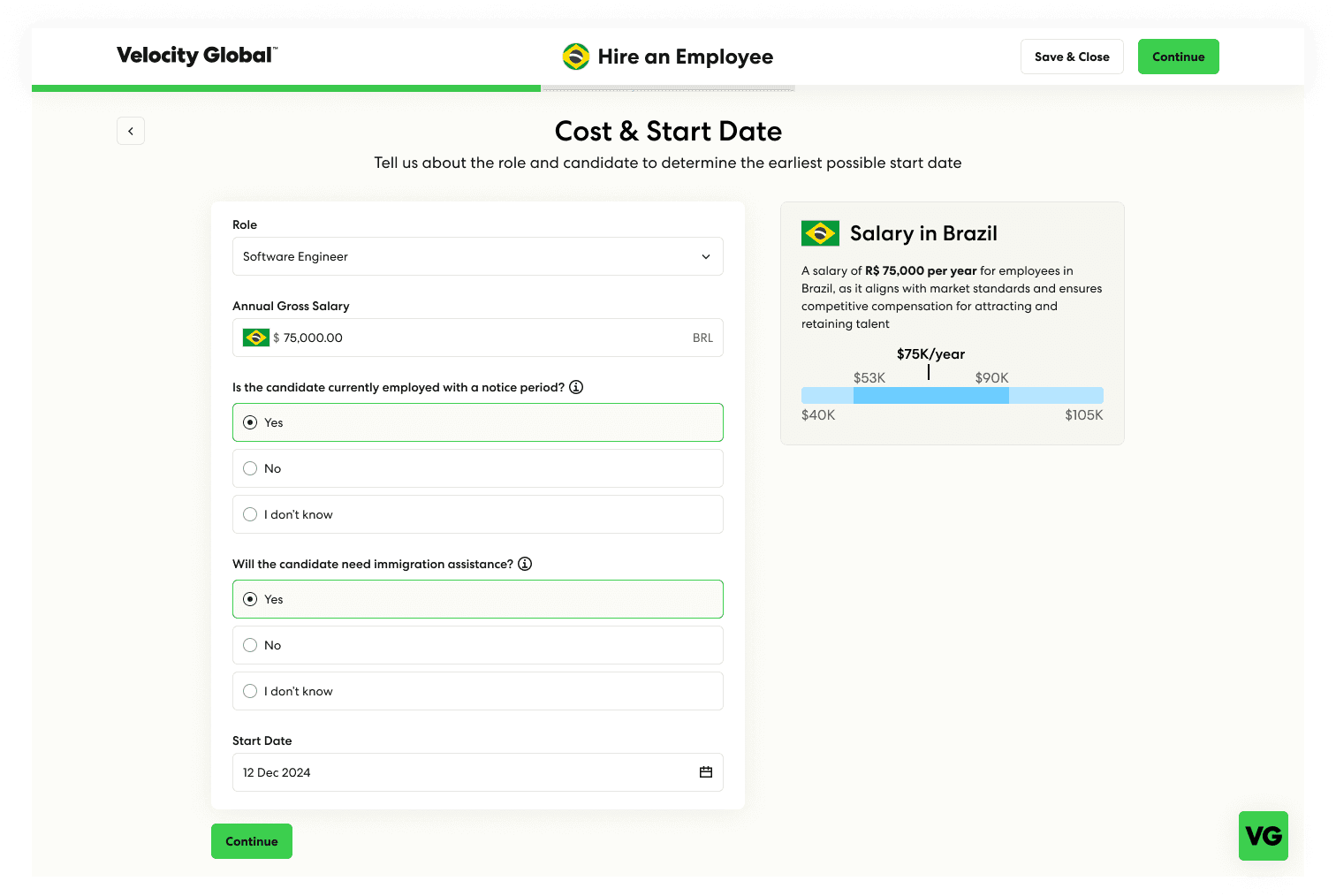
01 ∙ Simplify the experience with a single-column, fully self-serve flow
Replace the outdated Excel-based process — and the confusing in-platform form that came after it — with a streamlined, single-column layout designed for clarity and autonomy.
The new design:
Uses plain, human language for field labels and instructions
Adds country-specific guidance directly at the field level
Organizes information in a way that aligns with users’ mental models
02 ∙ Add country-specific guidance and recommendations
One of the biggest challenges customers faced was knowing what to enter in each field. They relied heavily on our team for local hiring expertise and guidance.
The updated design provides inline, country-specific recommendations and validations to ensure entries are compliant and aligned with local standards — reducing confusion and dependence on operations support.

03 ∙ Enable team collaboration and sharing
Since multiple HR team members often collaborate on onboarding, the design allows users to invite coworkers to edit the flow or share a PDF for review, approval, or record-keeping. This ensures the process is collaborative, transparent, and efficient.

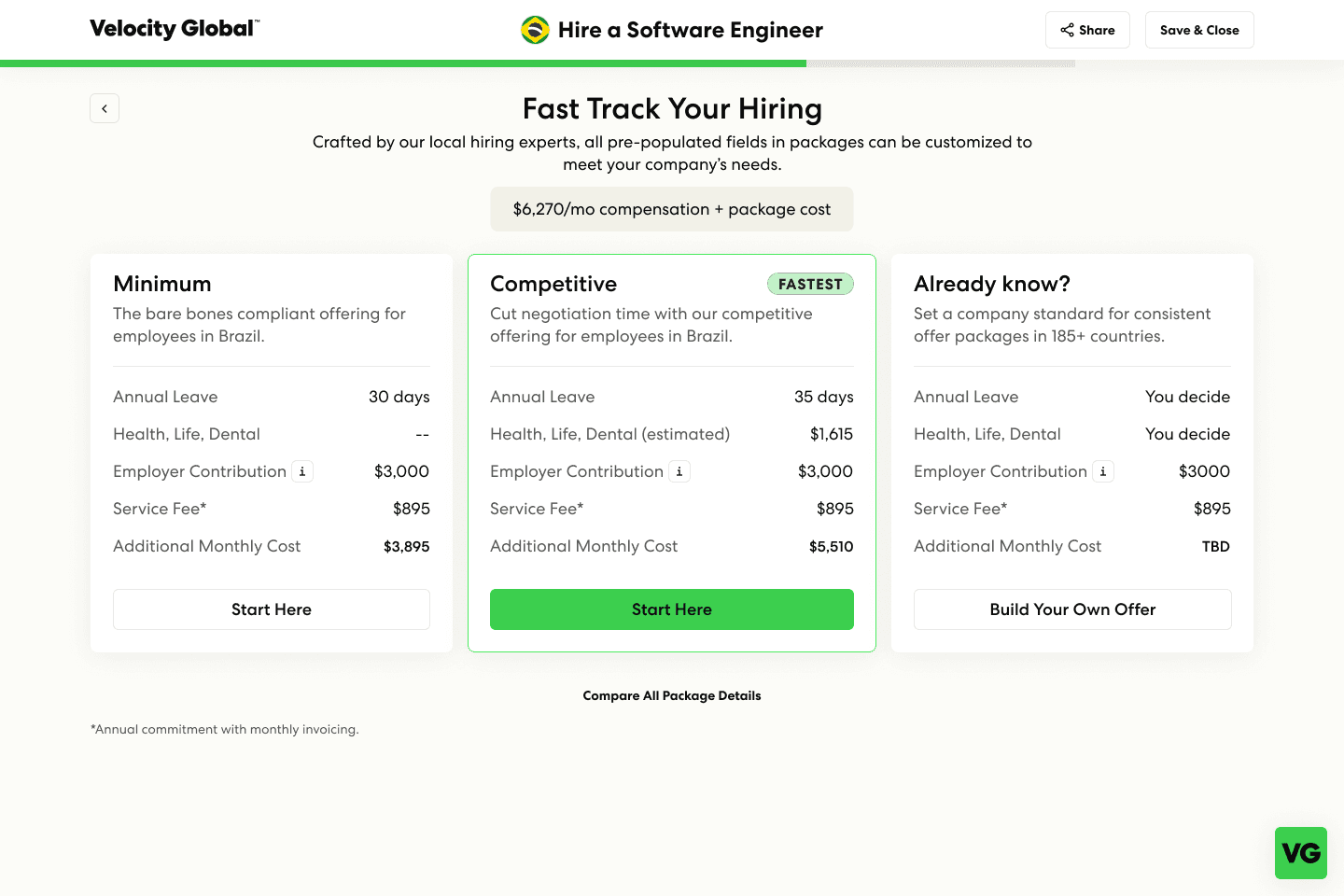
04 ∙ Pre-populate fields based on selected package
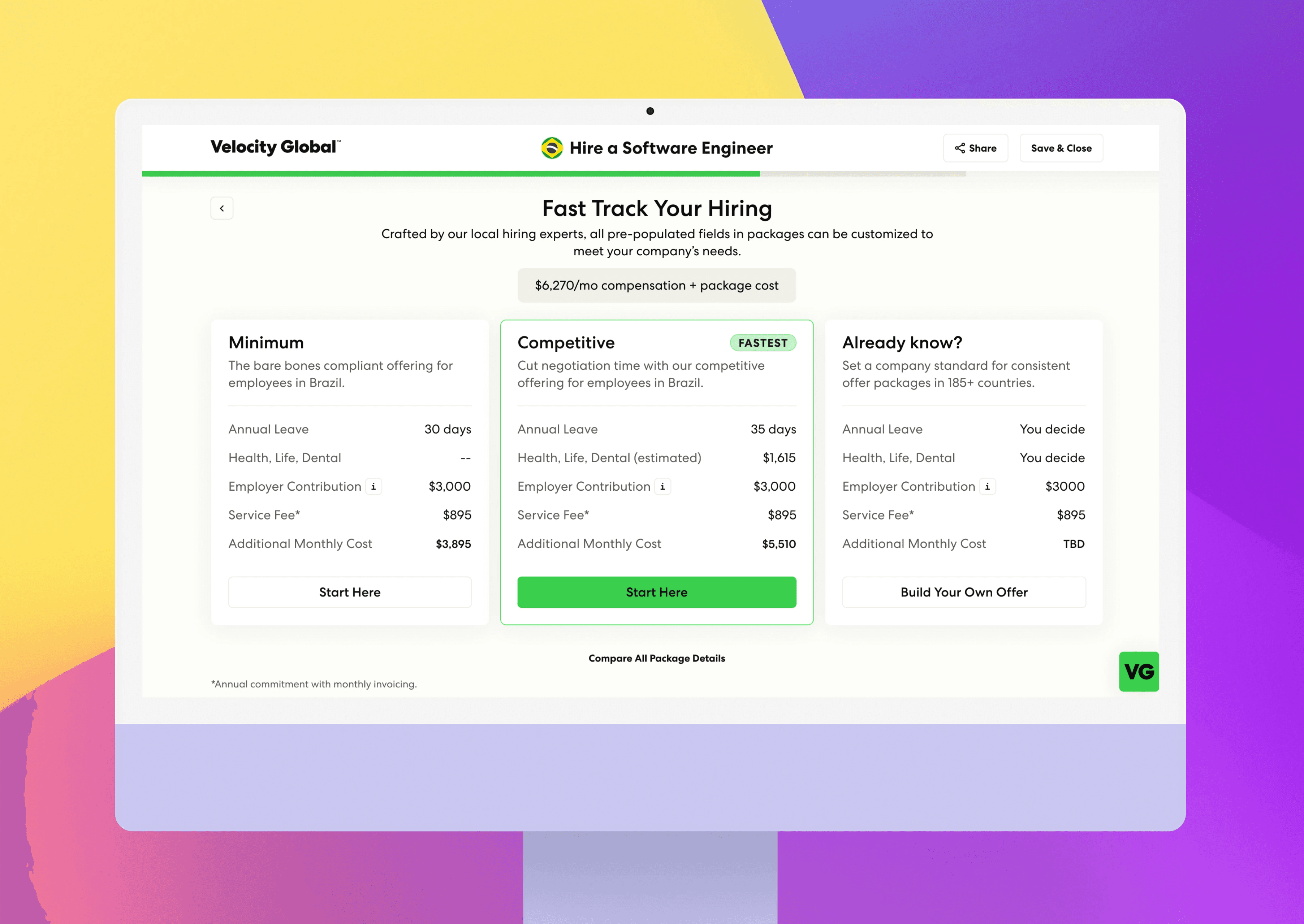
To save time and highlight Velocity Global’s country-specific hiring expertise, the design introduces predefined hiring packages that auto-fill key offer fields with recommended values tailored to each country.
MVP Launch

For the MVP, we integrated key solutions into the existing flow to move closer to the target-state design:
✅ Single-column layout for clarity and readability
✅ Field-level country recommendations and validations to guide users
✅ Simplified field titles for easier comprehension
✅ Multi-user access so HR team members can collaborate within the flow
✅ First iteration of packages: users can select a Basic package or a Recommended package, which pre-populates fields to save time and showcase Velocity Global’s expertise
Key Learnings
Balance modernization with existing processes. The hiring flow had historically relied on heavy operations support as a “white glove” service. Updating it required small, iterative changes to avoid disrupting current workflows, but eventually, bigger foundational changes were necessary to truly enable self-serve.
Partner closely with development for complex systems. Building a consistent, scalable system of country-specific fields required heavy collaboration with developers, especially given unique requirements and validations for each country.
Prioritize impact for early rollout. We focused first on the top 11 countries, which accounted for 44% of all hirings, with plans to expand to all 185 countries — demonstrating the value of phased, data-driven implementation.
Self-serve requires strong foundations. Surface-level updates aren’t enough on a product built on outdated workflows; enabling autonomy requires redesigning flows, validations, and backend structures to support customers efficiently.